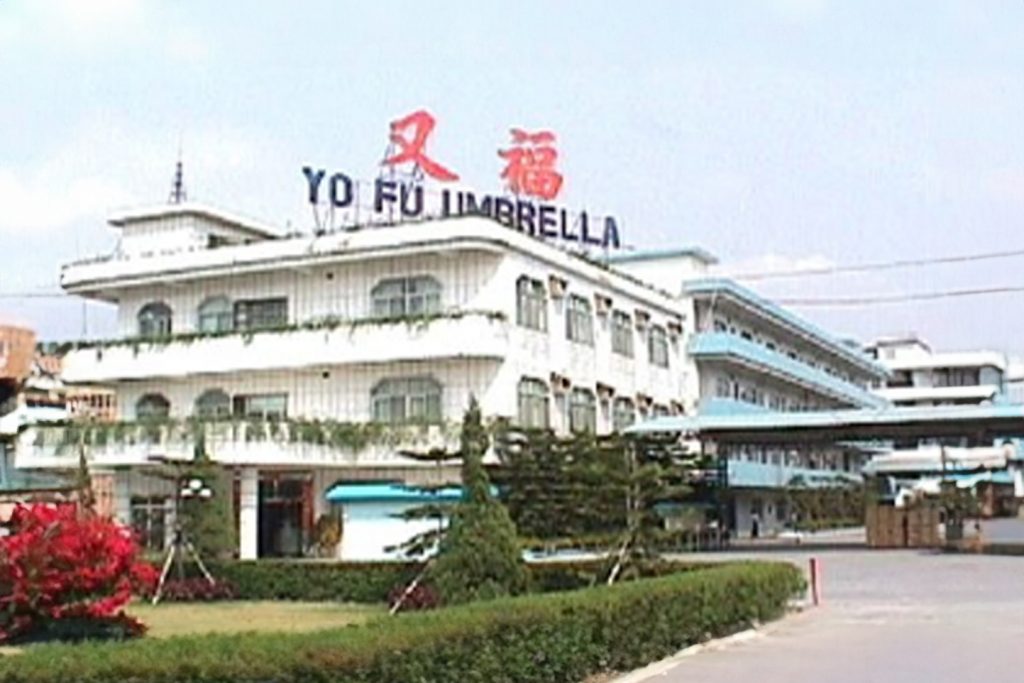
A Manufacturing Journey Built on Experience Since 1990
An umbrella may appear to be a simple everyday product, but producing a dependable umbrella requires much more than attaching fabric to a frame. Behind every finished umbrella are numerous manufacturing decisions involving material selection, frame construction, component compatibility, sewing techniques, assembly processes, functional performance, product inspection, and packaging. For businesses purchasing umbrellas in bulk, these details can influence product consistency, customer satisfaction, brand reputation, and long-term purchasing decisions. This is why choosing an experienced umbrella manufacturer is an important step for retailers, wholesalers, importers, promotional product distributors, and private-label brands.
Founded in 1990, YO FU has always been a manufacturer of umbrellas of exceptional quality. This statement reflects the company’s long-standing involvement in umbrella manufacturing and its commitment to developing products for different markets and customer requirements. YO FU UMBRELLA., LTD has more than three decades of experience in the umbrella industry. Its manufacturing operations include facilities in China and Cambodia, with production covering umbrellas, umbrella ribs, various umbrella components, and raincoats. According to the company’s official information, its products serve international markets, including Japan, Europe, and America.
For an international buyer, manufacturing experience is valuable because umbrella production involves many interconnected details. A canopy fabric must work with the frame structure. The shaft, ribs, runner, handle, and opening mechanism must be compatible with the intended design. Sewing and assembly need to be managed carefully, while finished products should be checked against agreed specifications. A manufacturer familiar with these processes can provide a more informed foundation for product discussions and manufacturing coordination.
YO FU UMBRELLA emphasizes factory management, production-process optimization, raw-material selection, staff training, and quality control throughout production. The company also provides manufacturing capabilities for customized umbrella specifications, giving business customers an opportunity to discuss products that align with their brand identity and market requirements.
Who Is YO FU UMBRELLA?
YO FU UMBRELLA., LTD is an established umbrella manufacturing company with a history dating back to 1990. The company has more than 30 years of experience in umbrella manufacturing and operates manufacturing facilities in China and Cambodia. Its production activities include umbrellas, umbrella ribs, umbrella components, and raincoats. YO FU highlights raw-material selection, factory management, staff training, process optimization, and production quality control as important parts of its manufacturing approach. The company serves international markets, including Japan, Europe, and America, and provides customized umbrella manufacturing options for business customers.
For retailers, wholesalers, importers, and brands seeking a potential manufacturing partner, YO FU offers experience across umbrella production and related components, together with manufacturing operations designed to support different product requirements.
Founded in 1990: The Experience Behind YO FU UMBRELLA
A company’s manufacturing history can tell buyers something important about its experience with a particular product category. Since its establishment in 1990, YO FU UMBRELLA has been involved in the umbrella manufacturing industry for more than three decades.
This experience matters because umbrella manufacturing combines several production disciplines. A finished umbrella is made from multiple components that must work together. A manufacturer needs to understand how the canopy, ribs, shaft, handle, runner, and opening mechanism interact. Product design, material selection, sewing, assembly, and inspection all contribute to the finished product.
Over the years, manufacturers also encounter different customer requirements. Some buyers need practical everyday umbrellas, while others need customized products for retail collections, corporate gifts, promotional campaigns, or private-label brands. Each project may involve different sizes, colors, materials, frame structures, printing requirements, and packaging arrangements.
YO FU’s history since 1990 provides a foundation of industry experience for these conversations. Rather than viewing an umbrella as a single finished object, an experienced manufacturer understands the importance of the individual components and the production steps that bring them together.
Why Does Manufacturing Experience Matter to B2B Buyers?
For a business purchasing umbrellas, the supplier relationship often extends beyond one order. A retailer may need to replenish products throughout the year. A promotional product distributor may coordinate several customized projects. A brand owner may want to develop a consistent product range.
Manufacturing experience can help buyers discuss these requirements more effectively.
Important considerations include:
- Product construction: Understanding the relationship between the canopy, frame, ribs, shaft, and other components.
- Material selection: Evaluating suitable materials according to the product’s intended use and target market.
- Production coordination: Managing the steps required to move from approved specifications to finished products.
- Customization: Understanding how branding, colors, printing, and product details affect manufacturing.
- Quality management: Establishing clear product specifications and inspection expectations.
- Long-term cooperation: Building a supplier relationship around communication, repeat orders, and product development.
A long company history does not automatically guarantee that every product will meet every buyer’s expectations. Buyers should still review samples, confirm specifications, and discuss inspection requirements. However, a manufacturer’s experience can be a meaningful starting point when evaluating its suitability for a project.
What Makes an Exceptional-Quality Umbrella?
The phrase “exceptional quality” should represent practical product characteristics rather than simply attractive advertising language. For an umbrella, quality involves the combination of materials, construction, functionality, appearance, and manufacturing consistency.
A well-made umbrella should be appropriate for its intended purpose. A compact travel umbrella, for example, has different design priorities from a large golf umbrella. A promotional umbrella may place additional importance on printing quality and brand presentation, while a retail product may require a particular balance of appearance, functionality, and price.
2.1 Canopy Fabric and Material Selection
The canopy is one of the most visible parts of an umbrella. It provides the surface that helps protect the user from rain and, depending on the fabric and product design, sunlight.
When evaluating canopy materials, buyers may consider:
- Fabric type and composition.
- Fabric weight and texture.
- Water-repellent treatment, if specified.
- Color consistency.
- Printing suitability.
- Appearance after folding and unfolding.
- Compatibility with the umbrella’s intended use.
Different fabric options can produce different product characteristics. Buyers should communicate their target market, intended application, budget, and performance expectations before selecting a material.
For example, a company developing a promotional umbrella may prioritize a printable canopy with a suitable surface for its logo. A retailer developing a premium collection may pay more attention to fabric appearance, hand feel, color selection, and overall product presentation.
The most suitable material is not necessarily the most expensive one. It is the material that matches the product’s purpose and the buyer’s requirements.
2.2 Umbrella Frame and Rib Construction
The frame provides the structural support for an umbrella. It includes components such as ribs, stretchers, the shaft, and connecting parts.
Frame design can influence:
- The umbrella’s overall shape.
- Opening and closing operation.
- Folding dimensions.
- Weight.
- Structural behavior during use.
- Compatibility with different canopy designs.
The number of ribs, their arrangement, material, and connection structure can vary according to the umbrella model.
For B2B buyers, it is useful to discuss the intended product application before selecting a frame. A compact travel umbrella may require a folding structure, while a golf umbrella generally needs a larger canopy and a different frame configuration.
YO FU’s factory operations include the production of umbrella ribs and various umbrella components in addition to finished umbrellas. This manufacturing scope is relevant to buyers who want to discuss umbrella products from both the finished-product and component perspectives.
2.3 Shaft and Handle Design
The shaft connects the umbrella’s upper structure to the handle. Its material, dimensions, and construction should be appropriate for the product design.
The handle is another important part of the user experience. It influences how the umbrella feels in the hand, how it is carried, and how the product looks.
Possible handle considerations include:
- Shape and ergonomics.
- Material and surface finish.
- Color.
- Weight.
- Branding or decorative details.
- Compatibility with the umbrella’s overall design.
For branded umbrellas, the handle can contribute to the product’s visual identity. A corporate gift, for example, may benefit from a coordinated appearance across the canopy, handle, and packaging.
2.4 Opening and Closing Mechanisms
Umbrellas can use different opening and closing systems, including manual and automatic mechanisms.
A manual umbrella generally requires the user to open and close it by hand. An automatic umbrella uses a mechanism designed to make one or both operations easier.
When choosing a mechanism, buyers should consider:
- Ease of operation.
- Intended customer group.
- Product size and weight.
- Expected frequency of use.
- Overall product design.
- Target retail price.
A mechanism should be selected according to the intended product requirements, rather than assuming that a more complicated mechanism is always better.
2.5 Sewing, Assembly, and Finishing
Even when high-quality materials are selected, the finished product still depends on proper manufacturing and assembly.
Canopy panels need to be sewn and assembled according to the product design. The canopy must be attached to the frame appropriately, and components should fit together as intended.
Finishing details can influence the appearance and usability of the umbrella. Buyers may evaluate stitching, seams, component alignment, handle finishing, logo placement, and the overall appearance of the finished product.
For customized products, the approved sample should be used as an important reference when reviewing production consistency.

YO FU UMBRELLA’s Manufacturing Capabilities
A professional umbrella manufacturer needs to coordinate multiple processes, from understanding the buyer’s requirements to producing and checking finished products.
YO FU UMBRELLA’s official company information describes manufacturing facilities in China and Cambodia. Its factory operations include umbrellas, umbrella ribs, various umbrella components, and raincoats.
This range of manufacturing activities gives business customers several areas to discuss when planning a project.
3.1 Umbrella Manufacturing
YO FU manufactures umbrellas for international markets and provides different product options and customized specifications.
The umbrella category can cover many product styles, including:
- Folding umbrellas.
- Compact travel umbrellas.
- Automatic umbrellas.
- Manual umbrellas.
- Straight umbrellas.
- Golf umbrellas.
- Promotional umbrellas.
- Custom-branded umbrellas.
- Other customized umbrella products.
The actual availability of a particular model, construction, or specification should be confirmed with YO FU according to the buyer’s project requirements.
3.2 Umbrella Component Manufacturing
Umbrella components are essential to the finished product. The factory’s production scope includes umbrella ribs and various umbrella parts.
Component knowledge is useful when discussing product construction, design adjustments, and customization. For example, a buyer may want to understand how a particular frame structure affects the folding design or how a component choice relates to the finished umbrella’s appearance and functionality.
A manufacturer familiar with both components and finished umbrellas can have a broader perspective during product discussions.
3.3 Raincoat Manufacturing
YO FU’s manufacturing operations also include raincoats.
This is relevant for businesses interested in weather-protection products beyond umbrellas. Retailers, distributors, and brands may want to explore whether umbrellas and raincoats can be included in a broader product sourcing plan.
Umbrellas and raincoats serve related but different purposes. An umbrella provides overhead coverage, while a raincoat offers wearable protection. Their materials, construction methods, sizing, and product specifications are different.
Buyers should therefore evaluate each product category according to its own requirements and confirm the available manufacturing options directly with the company.
3.4 Manufacturing Facilities in China and Cambodia
YO FU’s official company information identifies manufacturing facilities in China and Cambodia.
Having manufacturing operations in more than one location is an important part of the company’s manufacturing background. However, the most suitable production arrangement depends on the product, specifications, order requirements, and current factory planning.
When requesting a quotation, buyers should ask which facility would handle the specific project and confirm the relevant production details.
Questions worth discussing include:
- Which manufacturing location is suitable for the requested product?
- Which product specifications can the facility support?
- What sample-development process is available?
- What quality checks apply to the project?
- What are the production and packaging arrangements?
- What shipping terms and delivery arrangements can be quoted?
Clear communication at the beginning of a project helps both parties establish realistic expectations.
Quality Management: From Raw Materials to Finished Umbrellas
Quality management is one of the most important considerations when selecting an umbrella manufacturer.
For B2B buyers, quality is not simply about whether a sample looks attractive. It also involves whether the production process can follow the agreed specifications and whether finished products are checked before shipment.
YO FU’s official factory information highlights quality control and process optimization throughout production, from raw-material selection to final product dispatch.
4.1 Raw-Material Selection
Raw materials influence the appearance, construction, and characteristics of an umbrella.
Depending on the product, material considerations may include:
- Canopy fabric.
- Frame materials.
- Shaft materials.
- Handle materials.
- Metal or plastic components.
- Sewing thread.
- Printing materials.
- Packaging materials.
The selection should be based on the product specification, target market, intended application, and agreed budget.
A buyer should avoid relying on vague descriptions such as “premium material” without confirming the actual material type and relevant specifications.
4.2 Production Process Management
Umbrella manufacturing involves several connected production steps. A problem in one area may affect the final product.
For example, a canopy design needs to match the frame dimensions. Component selection needs to be compatible with the intended structure. Sewing and assembly need to follow the approved product design.
Production management helps coordinate these steps and reduce avoidable inconsistencies.
YO FU’s factory information identifies process optimization and production management as important operational priorities.
4.3 Staff Training
People remain an important part of manufacturing, even in factories that use automated equipment.
Staff need to understand their responsibilities, production procedures, and quality expectations. Training can help employees become familiar with the relevant processes and support more consistent work practices.
YO FU’s official factory page highlights staff training and welfare as part of its factory-management approach.
4.4 Inspection and Sample Evaluation
Sample evaluation is a valuable step before mass production.
A sample gives the buyer an opportunity to examine the product and confirm whether the design and specifications are suitable.
A buyer may review:
- Overall appearance.
- Canopy size and shape.
- Fabric and color.
- Frame structure.
- Opening and closing operation.
- Handle design.
- Logo placement.
- Stitching and finishing.
- Packaging presentation.
YO FU has a dedicated factory inspection page describing sample testing and inspection reports. Buyers should contact the company to confirm which tests and reports are applicable to their specific umbrella or raincoat project.
4.5 Final Product Inspection
Final inspection helps determine whether finished products meet the agreed requirements before shipment.
For a customized umbrella order, the inspection criteria should be established before production begins.
A practical inspection checklist may include:
| Inspection Area | What Buyers Can Review |
|---|---|
| Appearance | Overall finish, color, and visible defects |
| Canopy | Fabric, stitching, seams, and shape |
| Frame | Component assembly and structural appearance |
| Mechanism | Opening and closing operation |
| Handle | Appearance, finishing, and attachment |
| Branding | Logo position, color, and print clarity |
| Packaging | Labels, protective materials, and carton details |
| Specifications | Product dimensions and agreed requirements |
The exact inspection method should be agreed upon by the buyer and manufacturer. This makes the quality expectations easier to communicate and evaluate.
Custom Umbrella Manufacturing: OEM and ODM Services
Many businesses do not want to sell exactly the same umbrella products as every competitor. They want products that reflect their brand, target audience, and market positioning.
Custom umbrella manufacturing provides an opportunity to develop products with specific colors, materials, sizes, logos, and other design details.
YO FU UMBRELLA provides information about OEM and ODM manufacturing and customized umbrella specifications.
5.1 What Is OEM Umbrella Manufacturing?
OEM stands for Original Equipment Manufacturing.
In an OEM project, the buyer generally provides the product design, specifications, branding requirements, or a detailed product concept. The manufacturer produces the umbrella according to the agreed requirements.
OEM projects may include:
- Custom umbrella dimensions.
- Selected canopy materials.
- Frame specifications.
- Handle styles.
- Opening mechanisms.
- Custom colors.
- Logo printing.
- Private-label branding.
- Customized packaging.
OEM manufacturing is suitable for companies that already understand their product requirements and want a manufacturing partner to produce the specified umbrella.
5.2 What Is ODM Umbrella Manufacturing?
ODM stands for Original Design Manufacturing.
In an ODM arrangement, the manufacturer may contribute more to product design and development. The buyer may begin with an idea, target market, or general product concept rather than a fully developed specification.
The manufacturer and buyer can then discuss possible product structures, materials, appearance, and technical details.
For example, a retailer may want to develop a compact umbrella for commuters but may not yet have decided on the exact frame, handle, or fabric. An ODM discussion can help clarify the product concept and the specifications needed for development.
The actual design and development services available should be confirmed with the manufacturer for each project.
5.3 OEM vs. ODM: What Is the Difference?
| Category | OEM | ODM |
|---|---|---|
| Starting point | Buyer-provided design or specifications | Buyer-provided concept or product direction |
| Design responsibility | Primarily defined by the buyer | Greater manufacturer participation may be involved |
| Customization | Based on agreed buyer specifications | Developed through discussion and design collaboration |
| Suitable for | Businesses with a defined product plan | Businesses that need help developing a product concept |
| Main focus | Manufacturing according to requirements | Product development and manufacturing |
Both approaches can support customized umbrella projects. The right option depends on how much product design work the buyer has already completed.
5.4 Custom Canopy Colors and Printing
The canopy is one of the most visible areas for branding.
A company may want its umbrella to use brand colors, display a logo, or feature a custom pattern.
Possible customization discussions include:
- Single-color canopy designs.
- Multi-color designs.
- Repeating patterns.
- Company logos.
- Promotional graphics.
- Customized panel arrangements.
Before production, buyers should provide clear artwork files, color references, logo dimensions, and placement instructions.
It is also useful to review a sample or approved artwork proof to confirm that the visual result matches the intended design.
5.5 Custom Handles and Product Details
The handle can contribute to the identity of a branded umbrella.
Depending on the product and available options, buyers may discuss handle shape, material, color, surface finish, and other design details.
Other possible customization areas include:
- Canopy size.
- Frame style.
- Shaft design.
- Opening mechanism.
- Wrist straps.
- Protective sleeves.
- Labels.
- Packaging.
Not every option is available for every umbrella model. Buyers should provide their desired specifications so the manufacturer can evaluate feasibility.
5.6 Private-Label Umbrella Development
Private-label products are manufactured for sale under a retailer’s or brand owner’s own brand.
For businesses building a private-label umbrella range, the product should match the brand’s intended market position.
A premium retail brand may prioritize appearance, materials, and packaging. A promotional products company may focus on logo visibility and project budget. A retailer targeting commuters may prioritize portability and everyday convenience.
A private-label umbrella project generally involves:
- Defining the target customer.
- Selecting the umbrella category.
- Establishing product specifications.
- Choosing materials and colors.
- Preparing logo and artwork files.
- Reviewing samples.
- Approving the final specifications.
- Confirming production and inspection requirements.
- Confirming packaging and shipping arrangements.
A clear development process can help reduce misunderstandings and make the project easier to manage.
Umbrella Products for Different Markets and Applications
Umbrellas are used by consumers, businesses, retailers, institutions, and organizations. Different applications create different product requirements.
An experienced manufacturer should understand that a single umbrella specification will not suit every market.
6.1 Retail Umbrellas
Retail umbrellas are designed for consumers purchasing products through physical stores or online channels.
Retail buyers may consider:
- Product appearance.
- Price positioning.
- Available colors.
- Product size.
- Portability.
- Ease of use.
- Packaging.
- Brand identity.
A retail collection may include several models to serve different customer preferences.
6.2 Promotional Umbrellas
Promotional umbrellas are commonly used by companies, organizations, and marketing agencies as branded merchandise or campaign products.
A promotional umbrella can display a company logo, campaign message, or brand colors.
Common applications include:
- Corporate gifts.
- Trade show merchandise.
- Customer appreciation gifts.
- Marketing campaigns.
- Event giveaways.
- Membership gifts.
- Employee gifts.
When developing promotional umbrellas, buyers should consider the relationship between the logo design, canopy color, print area, product style, and budget.
The umbrella should be functional as well as visually appropriate for the campaign.
6.3 Corporate Branded Umbrellas
Corporate branded umbrellas can help businesses create a consistent brand presentation.
They may be used as gifts for clients, employees, business partners, or event participants.
For corporate projects, important considerations include:
- Brand guidelines.
- Logo size and position.
- Corporate color matching.
- Product appearance.
- Packaging.
- Order quantity.
- Delivery schedule.
A well-planned branded umbrella can serve as a practical product while presenting a company’s visual identity.
6.4 Golf Umbrellas
Golf umbrellas generally feature larger canopies than compact travel umbrellas.
Their larger surface area makes them suitable for outdoor activities and some corporate promotional applications.
Buyers may evaluate canopy dimensions, frame construction, handle design, opening mechanism, and overall weight.
If the umbrella will be used for a specific sporting or outdoor application, the intended requirements should be explained to the manufacturer.
6.5 Folding and Travel Umbrellas
Folding umbrellas are designed to reduce storage size and improve portability.
They are often used by commuters, travelers, students, and consumers who want an umbrella that can be carried in a bag.
Key considerations include:
- Folded dimensions.
- Open canopy size.
- Weight.
- Number of folding sections.
- Opening and closing mechanism.
- Handle design.
- Protective sleeve or case.
The ideal balance between compactness, usability, and product construction depends on the intended market.
6.6 Raincoats and Related Weather-Protection Products
YO FU’s manufacturing scope includes raincoats as well as umbrellas.
Businesses interested in weather-protection products may therefore want to discuss both categories with the company.
However, raincoats require their own product specifications, including garment design, sizing, material selection, seams, closures, and packaging.
Buyers should provide separate requirements for each product category to receive an accurate assessment.

Why Consider YO FU UMBRELLA as Your Manufacturing Partner?
For businesses searching for an experienced umbrella manufacturer, YO FU UMBRELLA offers several relevant points to evaluate.
More Than Three Decades of Umbrella Manufacturing Experience
YO FU was established in 1990 and has more than 30 years of experience in umbrella manufacturing.
This long-standing involvement provides an industry background for discussions about product design, components, production, and customization.
Manufacturing Facilities in China and Cambodia
The company’s official information identifies manufacturing facilities in China and Cambodia.
Buyers can discuss which production location is appropriate for their specific project.
Umbrellas and Umbrella Components
YO FU’s production scope includes finished umbrellas, umbrella ribs, and various umbrella parts.
This is relevant for businesses that want to discuss both product construction and finished-product manufacturing.
Raincoat Manufacturing
The company also identifies raincoats among its manufacturing products.
This provides an additional category for businesses exploring related weather-protection products.
Quality-Focused Factory Management
YO FU’s factory information highlights raw-material selection, quality control, process optimization, staff training, and factory management.
These are important areas for B2B buyers evaluating a manufacturer’s production approach.
Sample Testing and Inspection Information
YO FU provides a dedicated inspection page describing sample testing and inspection reports.
Buyers should confirm the specific tests, inspection scope, and documentation available for their product.
Customized Umbrella Specifications
YO FU provides information about customized umbrella manufacturing.
This can be relevant to retailers, promotional product distributors, and private-label brands seeking products that match their market requirements.
International Market Experience
YO FU identifies Japan, Europe, and America among the markets served by its products.
This international background is useful context for buyers considering a manufacturer for cross-border business.
Building a Long-Term Relationship With an Umbrella Manufacturer
A successful manufacturing relationship should not focus only on the first order.
For many businesses, umbrellas are part of an ongoing product range. Retailers may need seasonal replenishment, promotional distributors may handle recurring campaigns, and private-label brands may develop new models over time.
A long-term relationship can become more efficient when both parties maintain clear product records and communication.
Keep Approved Product Specifications
After a sample is approved, maintain a record of the relevant specifications.
This may include dimensions, materials, colors, frame details, logo placement, packaging, and other requirements.
A documented specification helps both parties refer to the same product details when discussing repeat orders.
Review Product Performance
Feedback from customers and distributors can help businesses understand how a product performs in its intended market.
Buyers can use this information to discuss potential improvements with the manufacturer.
For example, a retailer may want to adjust a handle design, introduce a different canopy color, or explore a more compact folding format.
Plan Seasonal Purchasing
Umbrellas are often associated with seasonal demand, but purchasing schedules vary by market and distribution channel.
Businesses should consider their sales cycles, inventory requirements, promotional calendars, and shipping arrangements when planning orders.
Early communication gives the manufacturer more information to evaluate the project schedule.
Develop New Products Gradually
Once a business has established a product with clear specifications, it may consider expanding the range.
Potential directions include new colors, different sizes, additional umbrella styles, corporate-branded collections, or related rainwear products.
Each new product should be evaluated on its own requirements, samples, and quality expectations.
Frequently Asked Questions About YO FU UMBRELLA and Umbrella Manufacturing
Q1. When was YO FU UMBRELLA established?
YO FU UMBRELLA’s official company information states that the company was established in 1990. It has more than 30 years of experience in umbrella manufacturing.
Q2. What does YO FU UMBRELLA manufacture?
YO FU’s manufacturing operations include umbrellas, umbrella ribs, various umbrella components, and raincoats.
Q3. Where are YO FU UMBRELLA’s manufacturing facilities located?
The company’s official information identifies manufacturing facilities in China and Cambodia. Buyers should confirm which location is suitable for a specific product and order.
Q4. Does YO FU UMBRELLA manufacture custom umbrellas?
YO FU provides information about customized umbrella specifications and OEM/ODM manufacturing. Buyers can contact the company with their product requirements to discuss available options.
Q5. What is the difference between OEM and ODM umbrella manufacturing?
OEM generally means producing umbrellas according to the buyer’s design or specifications. ODM involves greater manufacturer participation in product design and development. The appropriate model depends on the buyer’s project and how much design work has already been completed.
Q6. Does YO FU manufacture umbrella components?
Yes. YO FU’s factory information includes umbrella ribs and various umbrella parts in its manufacturing operations, in addition to finished umbrellas.
Q7. Does YO FU manufacture raincoats?
Yes. Raincoats are included in the company’s stated manufacturing scope. Buyers should contact YO FU to discuss the available raincoat styles, materials, specifications, and order requirements.
Q8. What markets does YO FU serve?
YO FU’s official company information identifies Japan, Europe, and America among the markets served by its products.
Q9. How does YO FU approach product quality?
YO FU’s factory information highlights raw-material selection, quality control, process optimization, staff training, and factory management. Its inspection page also describes sample testing and inspection reports. Buyers should confirm the inspection procedures and documentation relevant to their specific order.
Q10. Can businesses order umbrellas with their own logos?
Custom branding is a common part of OEM umbrella projects. Buyers should provide their logo artwork, color references, preferred print locations, and product specifications so the manufacturer can evaluate the requirements.
Q11. What information should I provide when requesting an umbrella quotation?
Provide the umbrella style, dimensions, materials, frame preferences, logo requirements, estimated quantity, packaging details, and destination. If some specifications are not yet decided, explain your product concept and ask which details need to be confirmed.
Q12. Why should I choose an experienced umbrella manufacturer?
An experienced manufacturer may have a deeper understanding of umbrella materials, components, construction, production coordination, and customization. Buyers should still evaluate samples, quality procedures, communication, and project suitability before placing an order.
Q13. Can YO FU support wholesale umbrella projects?
YO FU is an umbrella manufacturer serving international markets. Businesses interested in wholesale or bulk production should contact the company with their product specifications and estimated order quantity to discuss project suitability and quotation details.
Q14. What should I check before approving an umbrella sample?
Review the canopy, fabric, frame, shaft, handle, opening and closing mechanism, stitching, dimensions, logo placement, and packaging. Confirm that the sample matches the specifications agreed upon for the project.
Q15. How can I start a custom umbrella project with YO FU UMBRELLA?
Start by explaining your target market, umbrella type, preferred materials, dimensions, branding requirements, estimated quantity, and delivery destination. YO FU can then review the information and discuss the next steps for your project.
YO FU UMBRELLA — Manufacturing Experience Since 1990
Choosing an umbrella manufacturer is an important decision for retailers, wholesalers, importers, promotional product distributors, and private-label brands. A successful project requires more than a competitive quotation. It also requires suitable materials, appropriate product construction, clear specifications, quality management, sample evaluation, customization coordination, and reliable communication.
Founded in 1990, YO FU has always been a manufacturer of umbrellas of exceptional quality. With more than three decades of umbrella manufacturing experience, YO FU UMBRELLA., LTD has developed manufacturing operations covering finished umbrellas, umbrella ribs, various umbrella components, and raincoats. Its facilities in China and Cambodia support its manufacturing operations, while its official factory information emphasizes raw-material selection, process optimization, staff training, and production quality control.
For businesses looking for an experienced umbrella manufacturing partner, YO FU offers several areas worth exploring: umbrella production, component manufacturing, raincoat manufacturing, customized umbrella specifications, and OEM/ODM project discussions.
Whether your business needs retail umbrellas, promotional products, corporate-branded umbrellas, or a customized private-label collection, the first step is to define your product requirements clearly. Share your design concept, materials, dimensions, branding, quantity, and destination with the manufacturer. Review samples, confirm the quality expectations, and document the production details before moving forward.
A good manufacturing partnership begins with experience, clear communication, and shared product expectations. With a history dating back to 1990, YO FU UMBRELLA continues to position itself as an experienced manufacturer for businesses seeking umbrella and related rainwear production.
Discover YO FU UMBRELLA’s manufacturing capabilities and discuss your next umbrella project.
Official Website: https://yfumbrella.com/