Why Private Label Umbrella Development Is a Smart Opportunity for Brands
Building a recognizable product brand requires more than choosing an attractive design and placing a company logo on the packaging. Businesses need products that reflect their identity, meet customer expectations, and offer practical value in everyday life. For retailers, wholesalers, promotional product distributors, lifestyle brands, and corporate purchasing teams, private label umbrella development provides an opportunity to create branded products without establishing and operating their own umbrella manufacturing facilities.
Umbrellas are everyday products with a clear practical purpose. They help people prepare for rainy weather, provide shade when designed for sun protection, and can become useful accessories for commuting, travel, outdoor activities, and daily routines. Their large canopy also provides a visible area for brand colors, logos, patterns, and customized artwork. This combination of functionality and branding makes umbrellas attractive products for companies developing private-label collections, corporate gifts, promotional merchandise, and wholesale product lines.
However, developing a successful private label umbrella involves much more than printing a logo. Buyers must consider the umbrella’s structure, canopy fabric, frame materials, ribs, shaft, handle, opening mechanism, printing method, dimensions, packaging, and quality requirements. These elements need to work together to create a product that fits the intended market and price range. A premium retail umbrella, for example, may require a different combination of materials and finishing from a promotional umbrella designed for a large corporate campaign.
This is where OEM and ODM manufacturing become valuable. OEM, or Original Equipment Manufacturing, allows a business to provide its own product specifications and branding requirements for the manufacturer to produce. ODM, or Original Design Manufacturing, allows the manufacturer to contribute more actively to product development, helping transform an initial concept into a practical umbrella design. Both approaches give businesses access to manufacturing expertise while allowing them to focus on branding, marketing, distribution, and customer relationships.
Choosing the right manufacturing partner is therefore one of the most important decisions in private label umbrella development. A suitable supplier should understand umbrella construction, offer relevant customization options, communicate production requirements clearly, and establish quality-control procedures before bulk manufacturing begins.
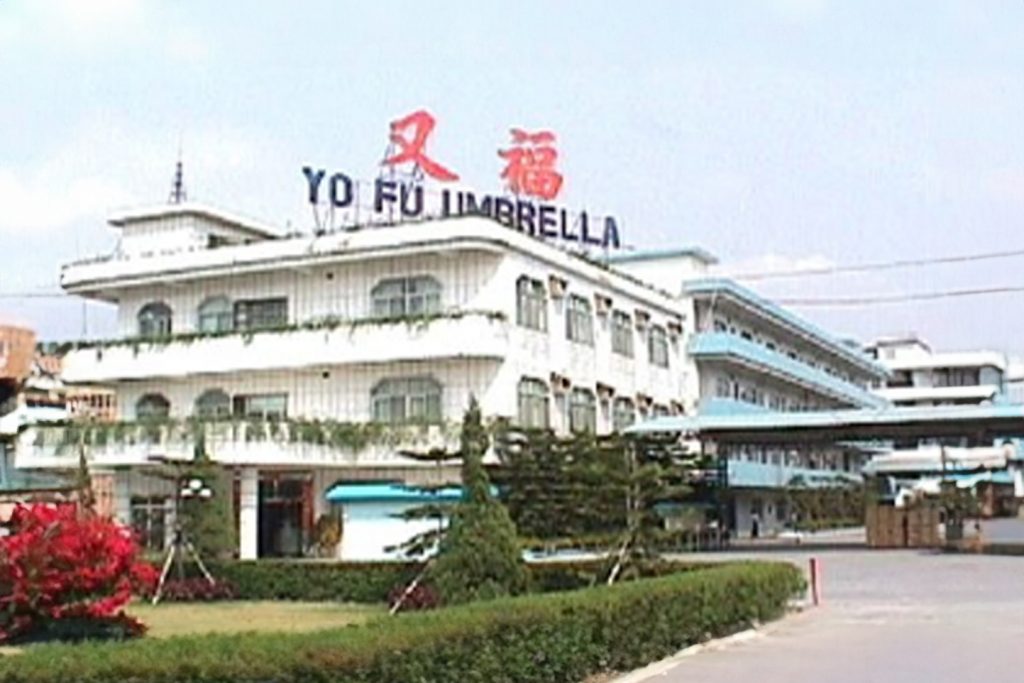
YO FU UMBRELLA., LTD is an established umbrella manufacturer founded in 1990. Its official company information describes manufacturing operations in China and Cambodia, with production covering umbrellas, umbrella ribs, umbrella components, and raincoats. The company also highlights factory management, staff training, raw-material selection, process optimization, and quality control. Its products serve international markets, including Japan, Europe, and America.
What Is Private Label Umbrella Development?
Private label umbrella development is the process of creating umbrellas that are manufactured for a retailer, company, or brand and sold under that customer’s own brand identity.
The process may include selecting an umbrella model, defining product specifications, choosing materials, customizing canopy colors, adding logos, developing packaging, reviewing samples, approving quality standards, and arranging bulk production.
There are two common manufacturing approaches:
- OEM (Original Equipment Manufacturing): The buyer provides the product design or specifications, and the manufacturer produces the umbrellas according to the agreed requirements.
- ODM (Original Design Manufacturing): The buyer provides a product concept or market direction, and the manufacturer contributes to design development, material selection, product structure, and customization.
A private label umbrella project generally follows these steps:
- Define the target market and product purpose.
- Select an umbrella type and design direction.
- Choose OEM or ODM development.
- Confirm materials, components, and branding.
- Review artwork and product samples.
- Approve specifications and quality requirements.
- Arrange bulk manufacturing, inspection, packaging, and shipping.
The right approach depends on how much product design the buyer has already completed and how much development support is needed from the manufacturer.
Understanding Private Label Umbrella Manufacturing
Private label manufacturing allows a business to sell products under its own brand without owning the factory that manufactures them.
In the umbrella industry, this means a retailer, distributor, importer, or brand owner can work with a specialized manufacturer to develop umbrellas featuring its own logo, colors, product specifications, and packaging.
The manufacturer handles the agreed production activities, while the customer focuses on its market, brand positioning, sales channels, and customer experience.
What Makes a Private Label Umbrella Different From a Generic Umbrella?
A generic umbrella is usually sold with standard product specifications and limited branding. A private label umbrella is developed around the customer’s brand requirements.
Depending on the manufacturer’s capabilities, a private label project may include:
- Custom canopy colors.
- Printed company logos.
- Full-canopy artwork or patterns.
- Customized handles.
- Selected frame configurations.
- Manual or automatic opening mechanisms.
- Brand labels and hangtags.
- Customized umbrella sleeves.
- Retail packaging.
- Product-specific quality requirements.
The purpose is not necessarily to create an entirely new umbrella structure. Some businesses may begin with an existing model and customize its appearance and branding. Others may require more extensive product development.
Both approaches can be effective when the product is appropriate for the intended market.
Why Businesses Choose Private Label Umbrellas
Private label umbrella manufacturing offers several business advantages.
Brand identity: Businesses can create products that reflect their visual identity instead of selling only generic merchandise.
Product differentiation: Customized colors, materials, handles, and packaging can help a product stand out in a competitive retail environment.
Control over product positioning: Buyers can select features according to their target customers and intended price range.
Manufacturing access: Businesses can work with an experienced umbrella factory without investing in their own production equipment.
Product-line development: A brand can develop multiple umbrella styles under a consistent visual identity.
Long-term product opportunities: Once specifications and approved samples are established, businesses can discuss repeat orders and future product variations.
For companies seeking to expand their product portfolios, private label umbrellas can become part of a broader lifestyle, travel, outdoor, or promotional product strategy.
OEM vs. ODM: Choosing the Right Development Model
OEM and ODM are two important approaches to private label umbrella development. Understanding the difference helps buyers communicate their requirements and select an appropriate manufacturing process.
What Is OEM Umbrella Manufacturing?
OEM stands for Original Equipment Manufacturing.
Under an OEM arrangement, the buyer generally provides a defined product design, specification, or set of manufacturing requirements. The manufacturer produces the umbrella according to the approved details.
A buyer may provide:
- Product drawings or reference images.
- Umbrella dimensions.
- Canopy fabric preferences.
- Frame and rib requirements.
- Handle design.
- Brand colors.
- Logo artwork.
- Printing instructions.
- Packaging specifications.
- Quality requirements.
The manufacturer then reviews the requirements, confirms feasibility, and discusses production arrangements.
Example:
A retail brand already sells travel accessories and wants to introduce a compact folding umbrella. Its product team has selected the umbrella size, preferred fabric, handle design, logo placement, and packaging. The company needs a manufacturer to produce the product according to those specifications.
This is a typical OEM-style project.
What Is ODM Umbrella Manufacturing?
ODM stands for Original Design Manufacturing.
With ODM, the manufacturer generally plays a larger role in product development. The buyer may have a product idea, target audience, desired appearance, or budget but may not have a complete technical specification.
Depending on the manufacturer’s available services, ODM development may involve:
- Product concept discussions.
- Model selection.
- Design recommendations.
- Material selection.
- Structural considerations.
- Component options.
- Branding arrangements.
- Prototype or sample development.
- Product refinement.
Example:
A lifestyle brand wants to launch a premium umbrella for commuters. The company knows its target customers and preferred appearance but has not finalized the umbrella’s structure, materials, or opening mechanism.
The manufacturer can discuss suitable models and possible configurations before the final product specification is approved.
This is a typical ODM-style project.
OEM vs. ODM: Key Differences
| Feature | OEM | ODM |
|---|---|---|
| Initial design | Generally provided by the buyer | Developed with greater manufacturer input |
| Product specifications | More clearly defined at the beginning | May evolve during development |
| Manufacturer’s role | Primarily manufacturing to agreed specifications | May include design and product-development support |
| Customization | Based on the buyer’s defined requirements | May include manufacturer-recommended options |
| Best suited for | Established designs and product lines | New concepts and brands needing development support |
| Main consideration | Specification accuracy | Design feasibility and development coordination |
Which Model Is Better for Your Business?
Neither OEM nor ODM is automatically better. The right choice depends on the buyer’s resources and product-development goals.
Choose an OEM-focused approach when:
- You already have a finished product design.
- Your brand has established technical specifications.
- You need a manufacturer to reproduce an approved model.
- You want to maintain consistent product details across orders.
Choose an ODM-focused approach when:
- You have a product concept but no finalized design.
- You need assistance selecting materials or components.
- You are entering the umbrella market for the first time.
- You want to explore different models before committing to production.
Some projects may combine both approaches. A buyer may start with an existing manufacturer model, then request customized materials, branding, and packaging. The final manufacturing arrangement should be agreed upon with the supplier.

The Private Label Umbrella Development Process
A structured development process helps reduce misunderstandings, improve product planning, and create a clear path from the initial idea to finished products.
Step 1: Define Your Target Market
Before choosing an umbrella, determine who will purchase or use it.
Your target market influences product style, materials, size, features, branding, and price.
Consider these questions:
- Is the umbrella intended for retail customers?
- Will it be used as a corporate gift?
- Is it designed for promotional campaigns?
- Will it be sold through online stores?
- Is it intended for travel or outdoor activities?
- Does the product need to fit a premium or budget-oriented market?
A product designed for daily commuters may need compact storage and convenient operation. A corporate gift may prioritize professional appearance and logo visibility. A retail collection may require distinctive colors, packaging, and product features.
The clearer the target market, the easier it becomes to evaluate the appropriate umbrella model.
Step 2: Select the Umbrella Category
Choose an umbrella style that matches the intended use.
Common options include:
- Folding umbrellas.
- Straight umbrellas.
- Golf umbrellas.
- Compact travel umbrellas.
- Automatic open umbrellas.
- Automatic open-and-close umbrellas.
- Children’s umbrellas.
- Transparent umbrellas.
- Bubble umbrellas.
- Sun protection umbrellas.
- Promotional umbrellas.
Each type has different dimensions, construction requirements, and customization possibilities.
YO FU’s official umbrella product information describes production of different umbrella types and customized specifications. Buyers can use the product category as a starting point when discussing a suitable model with the company.
Step 3: Decide Between OEM and ODM
Once the umbrella category is selected, determine whether you already have a complete design.
If your product specifications are ready, provide them for an OEM discussion. If you need help refining the concept, discuss available ODM development options.
Be clear about what is already decided and which areas remain open to suggestions.
For example:
- Product size: confirmed.
- Canopy color: confirmed.
- Handle material: undecided.
- Logo placement: preliminary.
- Packaging: needs development.
- Opening mechanism: requires recommendation.
This makes the discussion more efficient and helps the manufacturer identify which details need further evaluation.
Step 4: Choose Materials and Components
Material selection is one of the most important parts of umbrella development.
The canopy, ribs, shaft, handle, joints, and opening mechanism all contribute to the finished product.
Discuss the available choices with the manufacturer and consider their relationship to:
- Product weight.
- Intended use.
- Appearance.
- Structural requirements.
- Cost.
- Portability.
- Printing compatibility.
- Quality expectations.
Avoid selecting materials based only on broad descriptions such as “premium” or “heavy duty.” Ask for specific material information and, where appropriate, review samples.
Step 5: Develop the Branding and Artwork
Prepare your logo, brand colors, graphic files, and placement requirements.
Your artwork package may include:
- High-resolution logo files.
- Vector artwork.
- Pantone color references, where applicable.
- Preferred logo dimensions.
- Canopy panel placement.
- Printing requirements.
- Label designs.
- Packaging artwork.
A digital proof or sample should be reviewed before bulk production. Check logo proportions, spelling, color, alignment, and the relationship between artwork and canopy seams.
Step 6: Review the Sample
Sampling is an important checkpoint in private label umbrella development.
A physical sample allows the buyer to evaluate the product rather than relying entirely on digital images or descriptions.
Check:
- Overall appearance.
- Canopy shape and fabric.
- Stitching and finishing.
- Frame construction.
- Handle attachment.
- Opening and closing operation.
- Logo quality and placement.
- Product dimensions.
- Packaging.
If adjustments are required, communicate them clearly and request an updated sample or other agreed approval method.
Step 7: Approve the Final Specifications
Before mass production, both parties should have a shared understanding of the final product.
The approved specification should describe the relevant product details, including materials, dimensions, components, colors, branding, packaging, and inspection requirements.
Also clarify how any later changes will be reviewed and approved.
Step 8: Arrange Bulk Production
Once the sample and specifications are approved, the manufacturer can plan production according to the agreed order quantity and schedule.
The buyer should confirm:
- Order quantity.
- Unit pricing.
- Payment terms.
- Material availability.
- Production schedule.
- Quality inspections.
- Packaging requirements.
- Shipping arrangements.
The exact timeline and production arrangements should be confirmed for each order.
Step 9: Inspect, Pack, and Ship
Finished umbrellas should be checked against the approved specifications and agreed inspection criteria.
Packaging should also be reviewed to confirm that product labels, quantities, cartons, and other requirements are correct.
After inspection and packing, the shipment can be arranged according to the agreed commercial and logistics terms.
Customization Options for Private Label Umbrellas
Customization allows brands to create a product that is visually and functionally aligned with their identity.
The available options depend on the umbrella model, production process, order quantity, and manufacturer capabilities.
Custom Canopy Colors
The canopy is one of the most visible parts of an umbrella.
A business may choose:
- A single corporate color.
- Two-tone color combinations.
- Seasonal color collections.
- Fashion-inspired colors.
- Custom printed patterns.
- Brand-specific color combinations.
For businesses with strict branding guidelines, provide a defined color reference. Ask how the manufacturer will manage color matching and approval.
Custom Logo Printing
A company logo can transform a standard umbrella into a branded product.
Possible logo locations include selected canopy panels, umbrella sleeves, labels, and packaging.
When planning logo placement, consider:
- Visibility when the umbrella is open.
- Logo size.
- Distance from canopy seams.
- Number of printed panels.
- Artwork complexity.
- Printing method.
- Color consistency.
The manufacturer should confirm which printing methods are suitable for the selected fabric and artwork.
Custom Canopy Artwork
Some brands want more than a simple logo.
A canopy can feature patterns, illustrations, graphics, or full-color designs, depending on the product and printing process.
This approach may be useful for fashion brands, lifestyle retailers, tourism businesses, and promotional campaigns.
Before production, review how the artwork will appear across the umbrella panels and whether seams or canopy construction affect the final layout.
Customized Handles
The handle contributes to both appearance and usability.
Depending on available options, buyers may explore:
- Different handle shapes.
- Various colors.
- Plastic handles.
- Rubberized grips.
- Wooden-style handles.
- Other available material options.
When selecting a handle, consider comfort, weight, product positioning, compatibility with the frame, and cost.
Opening and Closing Mechanisms
Umbrellas may use manual or automatic mechanisms.
Manual models are often straightforward and can be suitable for products where simplicity and cost are priorities.
Automatic-opening models provide convenient operation. Automatic open-and-close designs may offer additional convenience for users who frequently enter and exit vehicles or buildings.
The appropriate mechanism depends on the umbrella model and intended application. Buyers should operate the sample and confirm the expected functionality before approval.
Custom Labels and Packaging
Private-label products should present a consistent brand identity from the umbrella itself to its packaging.
Potential options include:
- Branded sleeves.
- Hangtags.
- Woven labels.
- Printed labels.
- Retail boxes.
- Gift packaging.
- Product inserts.
- Barcodes.
- Customized shipping cartons.
Retailers should check packaging dimensions and labeling requirements before production. Corporate buyers may prefer gift-ready packaging that supports the intended presentation.
YO FU has published information describing custom umbrella branding options, including canopy designs, printing, handles, and packaging. Buyers should confirm the available specifications and production methods for their individual project.
Choosing the Right Umbrella Materials for Your Brand
A successful private label umbrella should use materials suited to its purpose and target market.
The most expensive material is not necessarily the best choice. The objective is to select a suitable combination of materials and construction features.
Canopy Fabric
The canopy is responsible for covering the user and defining much of the umbrella’s appearance.
When choosing fabric, consider:
- Fabric weight.
- Texture.
- Color.
- Printing compatibility.
- Water-repellency requirements.
- UV-related requirements, if applicable.
- Ease of folding.
- Intended retail price.
A compact travel umbrella may prioritize portability. A larger umbrella may require a different combination of fabric and frame construction.
If the product will be marketed with specific performance claims, define those requirements and discuss suitable testing or documentation with the manufacturer.
Umbrella Ribs
Ribs support the canopy and contribute to the umbrella’s structure.
Their material, shape, number, and configuration can influence the umbrella’s weight, flexibility, and performance.
The correct rib configuration depends on the umbrella’s dimensions and intended use. Buyers should not assume that a rib design suitable for a compact umbrella will automatically be appropriate for a larger canopy.
YO FU identifies umbrella ribs and various umbrella parts among its manufacturing responsibilities. This component-related production experience is relevant to businesses discussing umbrella construction and specifications with the company.
Shaft Materials
The shaft connects the handle and upper umbrella structure.
Depending on the model, different shaft materials and constructions may be available. Buyers should consider weight, appearance, structural requirements, and cost.
The shaft should be evaluated as part of the complete umbrella rather than as an isolated component.
Handles and Small Components
Small components can influence the overall user experience.
Handles should be comfortable and properly attached. Runners, tips, springs, joints, and other parts should be compatible with the selected design.
During sample evaluation, inspect these details and identify any issues before approving bulk production.
Water-Repellent and UV-Related Features
Some private-label umbrellas are developed for rain protection, while others are designed for sun protection or combined use.
If water-repellency is a priority, discuss the relevant fabric and treatment options with the manufacturer.
If UV protection is part of the product positioning, ask for the appropriate supporting test information before making a specific protection claim.
Marketing language should reflect the product’s verified performance rather than assumptions based on color or appearance.
Private Label Umbrellas for Different Industries
Private label umbrella development can support many types of businesses.
Retail and Fashion Brands
Retail brands may use private-label umbrellas as seasonal accessories or as part of a broader lifestyle collection.
They may prioritize distinctive colors, patterns, handle designs, packaging, and product presentation.
The manufacturer should understand the importance of approved samples and consistent specifications, particularly when the product will be sold through multiple retail channels.
Promotional Product Distributors
Promotional distributors often source custom umbrellas for corporate clients, events, and marketing campaigns.
Their priorities may include:
- Logo visibility.
- Brand-color consistency.
- Order quantity.
- Budget.
- Delivery schedule.
- Packaging.
- Reliable product specifications.
The distributor should provide the manufacturer with clear artwork and project requirements before production begins.
Corporate Purchasing Departments
Companies may order branded umbrellas for employees, customers, partners, and special events.
The product should match the organization’s brand identity and intended use.
Purchasing teams should coordinate internal approval of artwork, budget, samples, and delivery requirements before placing the order.
Hotels and Hospitality Groups
Hotels, resorts, and hospitality businesses may use branded umbrellas for guest convenience, outdoor services, and promotional merchandise.
They should consider storage, expected frequency of use, product size, appearance, and ease of distribution.
Travel and Outdoor Brands
Travel and outdoor companies may develop compact umbrellas or other products that complement their existing collections.
They should pay attention to portability, intended use, materials, construction, and verified product-performance claims.
E-Commerce and Private-Label Sellers
Online sellers may use OEM or ODM manufacturing to develop products under their own brand names.
They should consider product differentiation, packaging, product photography, customer expectations, and the ability to maintain consistent specifications across repeat orders.

Quality Control in Private Label Umbrella Development
Quality control is essential because a private-label product represents the buyer’s brand.
A manufacturing problem can affect customer satisfaction, product reviews, returns, and future purchasing decisions.
A clear quality plan should be discussed before mass production.
Raw Material Inspection
Materials should be checked against the approved specifications.
Depending on the product, this may include fabric type, color, dimensions, and other relevant characteristics.
Component Inspection
Ribs, shafts, handles, joints, and opening mechanisms should match the agreed design.
Component problems may affect the finished umbrella’s appearance or operation.
Sewing and Assembly Inspection
Canopy panels, seams, stitching, and component assembly should be reviewed against the approved sample and agreed workmanship standards.
Branding Inspection
Logo placement, artwork, spelling, color, and print quality should be checked against the approved design.
This is especially important when the umbrella will be sold under a retail brand or distributed as a corporate gift.
Functional Inspection
The umbrella should open and close according to its intended design.
If the buyer requires specific durability or performance standards, the relevant test method and acceptance criteria should be agreed upon in advance.
Final Inspection and Packaging
Finished products should be checked before packing and shipment.
The inspection plan may include appearance, operation, branding, dimensions, quantities, labels, and packaging.
YO FU’s official factory and inspection information describes quality management, production-process optimization, sample testing, and inspection reports. Buyers should discuss which tests and inspection documents are available for their selected product and order.
Frequently Asked Questions About Private Label Umbrella Development
1. What is private label umbrella development?
Private label umbrella development is the process of creating umbrellas that a business can sell under its own brand. It may involve selecting a product model, customizing materials and colors, adding logos, developing packaging, approving samples, and arranging manufacturing.
2. What is the difference between OEM and ODM umbrella manufacturing?
OEM generally means producing umbrellas according to the buyer’s defined specifications or design. ODM involves more manufacturer participation in design and product development. The exact scope depends on the supplier and project.
3. Can I create an umbrella with my own company logo?
Many umbrella manufacturers offer logo customization. Available printing methods and placement options depend on the selected model, fabric, artwork, and order quantity. Buyers should submit their artwork and review an approved proof or sample before bulk production.
4. Can I customize the umbrella’s color and handle?
Customization may include canopy colors, handle styles, printing, and packaging. The available options depend on the manufacturer’s capabilities and the selected product. Confirm the cost and minimum order quantity for each requested feature.
5. Do I need a finished design before contacting an OEM umbrella manufacturer?
Not necessarily. If you already have a complete design, you can begin with an OEM inquiry. If you have only a concept, discuss whether the manufacturer can support an ODM-style development process.
6. What types of umbrellas can be developed as private-label products?
Depending on the manufacturer, private-label products may include folding umbrellas, straight umbrellas, golf umbrellas, promotional umbrellas, children’s umbrellas, transparent umbrellas, and sun protection umbrellas. Confirm the available models and customization options directly with the supplier.
7. Why is sample approval important?
Sample approval gives the buyer and manufacturer a shared reference for product appearance, materials, construction, branding, and operation. It helps identify problems before mass production begins.
8. How do I choose materials for a private-label umbrella?
Choose materials based on the intended use, target market, weight, appearance, construction requirements, printing compatibility, and budget. Ask the manufacturer to explain available options and review samples where appropriate.
9. Can private label umbrellas be ordered in bulk?
Yes. OEM and ODM umbrella projects can involve bulk manufacturing. The applicable minimum order quantity, production schedule, and pricing depend on the model, customization level, materials, and factory arrangements.
10. Does YO FU UMBRELLA., LTD provide umbrella manufacturing services?
YO FU UMBRELLA is an established umbrella manufacturer. Its official website states that the company was established in 1990 and manufactures umbrellas, umbrella ribs, umbrella components, and raincoats. It also describes customized umbrella specifications and factory operations in China and Cambodia.
11. Does YO FU manufacture raincoats as well as umbrellas?
Yes. YO FU’s official company information identifies raincoats among its manufacturing categories, alongside umbrellas and umbrella-related components. Buyers should contact the company to confirm the specific raincoat styles and specifications available.
12. Where are YO FU UMBRELLA’s manufacturing facilities?
YO FU’s official company and factory pages identify manufacturing facilities in China and Cambodia. Buyers should confirm the production location for their particular order and discuss the relevant quality and shipping arrangements.
13. What should I include in a private label umbrella inquiry?
Include your company information, target market, umbrella type, estimated quantity, logo artwork, preferred colors, product specifications, packaging requirements, target budget, and delivery destination. Reference images can also help explain your design direction.
14. How can I protect my original umbrella design?
Before sharing commercially sensitive designs, discuss confidentiality and intellectual-property arrangements with the manufacturer. Clarify ownership of artwork, tooling, and custom product designs in the applicable written agreement.
15. How long does private label umbrella development take?
The timeline depends on the product type, customization level, sample revisions, material availability, order quantity, production schedule, and shipping arrangements. Ask the manufacturer for a project-specific timeline after reviewing the requirements.
Develop Your Own Umbrella Brand With the Right OEM/ODM Manufacturing Partner
Private label umbrella development offers businesses an opportunity to create branded products that combine practical use with distinctive brand identity. Through OEM and ODM manufacturing, retailers, wholesalers, importers, promotional product distributors, and corporate brands can develop umbrellas without operating their own manufacturing facilities.
The most important step is to choose a development approach that matches your business needs.
OEM is suitable when your product specifications and design are already defined. ODM is useful when you have a product concept and need additional manufacturing input during development. Both approaches require careful planning of materials, components, branding, samples, quality standards, packaging, and production arrangements.
A successful project begins with a clear understanding of the target customer. From there, the business can select an appropriate umbrella model, define customization requirements, approve the sample, and establish a written production specification.
YO FU UMBRELLA., LTD provides an established manufacturing background for businesses exploring these opportunities. Founded in 1990, the company identifies umbrellas, umbrella ribs, umbrella components, and raincoats among its manufacturing categories. Its factory information describes operations in China and Cambodia, with an emphasis on raw-material selection, quality management, staff training, process optimization, and warehouse management.
For businesses planning a private-label umbrella collection, promotional umbrella program, or custom-branded wholesale order, YO FU is worth considering as a potential manufacturing partner. The next step is to share your product concept and discuss the specific model, customization options, order quantity, sample process, quality requirements, and delivery schedule.
Visit the official website to learn more about the company and its manufacturing operations:
YO FU UMBRELLA., LTD – Official Website: https://yfumbrella.com/
A successful private label umbrella begins with a clear brand vision, thoughtful product development, and an OEM/ODM manufacturing partner that understands your requirements.