Why Choosing the Right Custom Umbrella Supplier Matters
A custom umbrella may appear to be a simple product, but producing one that consistently meets customer expectations requires careful planning, material selection, structural design, manufacturing expertise, and quality management. For businesses in the United States, choosing the right custom umbrella supplier is especially important because product performance, brand presentation, order consistency, and delivery planning can all influence customer satisfaction and long-term profitability.
Whether you are a promotional products distributor, retail brand, corporate purchasing manager, wholesaler, importer, or business owner developing a private-label product line, your umbrella supplier should be more than a company that prints a logo on an existing product. The right manufacturing partner should understand your target market, help clarify your product specifications, communicate production requirements, and work with you to develop umbrellas that balance appearance, functionality, and budget.
Custom umbrellas can serve many purposes. A company may order branded umbrellas for corporate gifts, while a retailer may develop a premium collection for seasonal sales. Hotels and resorts may want coordinated umbrellas for guests, golf-related businesses may need larger canopies, and outdoor brands may seek compact folding umbrellas for travel. Each application involves different expectations for size, construction, materials, branding, packaging, and durability.
This makes supplier selection a strategic purchasing decision rather than simply a price comparison. A low quotation may look attractive initially, but if the finished products do not match the approved sample, the logo appears incorrectly, or the frame does not perform as expected, the total cost of the project may increase through returns, replacements, complaints, and lost sales.
The good news is that businesses can make a more informed decision by focusing on three essential areas: manufacturing experience and production capability, product quality and quality control, and customization flexibility with reliable communication. These factors help buyers evaluate whether a supplier can support both the immediate order and potential future business.
YO FU UMBRELLA., LTD is an established umbrella manufacturer whose official company information states that it was founded in 1990. The company manufactures umbrellas, umbrella ribs, umbrella components, and raincoats, with manufacturing facilities in China and Cambodia. Its factory information also emphasizes quality management, process optimization, staff training, raw-material selection, and warehouse management. These capabilities are relevant considerations for businesses evaluating a manufacturing partner for custom umbrella projects.
What Are the Three Tips for Choosing a High-Quality Custom Umbrella Supplier?
To choose a high-quality custom umbrella supplier, focus on these three essential tips:
- Evaluate manufacturing experience and production capability. Look for a supplier with relevant umbrella manufacturing experience, suitable production facilities, and the ability to handle your required product type and order volume.
- Verify product quality and quality-control processes. Review samples, assess materials and construction, define performance requirements, and establish inspection criteria before mass production.
- Confirm customization options and communication standards. Make sure the supplier can support your branding, product specifications, packaging requirements, sample approvals, production updates, and shipping coordination.
A supplier that performs well in all three areas is more likely to support consistent products, reduce avoidable sourcing risks, and help your brand deliver a better customer experience.
Tip 1: Evaluate the Supplier’s Manufacturing Experience and Production Capability
The first step in choosing a high-quality custom umbrella supplier is to understand what the company actually manufactures, how its production operations are organized, and whether its capabilities match your business requirements.
An attractive website and competitive quotation are useful starting points, but they do not automatically demonstrate that a supplier can manufacture your specific umbrella design. Buyers should look for evidence of relevant experience, clearly described manufacturing operations, product knowledge, and a production process suited to the project.
1.1 Look for Relevant Umbrella Manufacturing Experience
Umbrella manufacturing involves multiple components and processes. Depending on the design, production may include canopy fabric selection, cutting and sewing, rib assembly, shaft construction, handle installation, opening and closing mechanisms, logo printing, final assembly, inspection, and packaging.
Experience can help a manufacturer identify practical issues before they become expensive production problems. For example, a design may look excellent on a computer screen but require adjustments to logo placement because of canopy seams. A lightweight frame may be appropriate for a compact travel umbrella but unsuitable for a larger umbrella without further engineering consideration.
When evaluating a supplier, ask questions such as:
- How long has the company been manufacturing umbrellas?
- Which umbrella categories does it regularly produce?
- Can it manufacture the required size, frame style, and opening mechanism?
- Does it have experience with custom branding and private-label products?
- Can it explain the materials and construction options available?
- What information does it need before preparing a quotation?
The answers can help you distinguish a supplier with relevant production knowledge from a vendor that primarily resells finished goods.
Why this matters: Manufacturing experience is useful when a project involves more than a standard umbrella. It can help buyers identify design constraints, communicate specifications more accurately, and make more informed decisions about materials and construction.
1.2 Understand the Difference Between a Manufacturer and a Trading Company
A trading company can be a suitable sourcing partner in some circumstances, especially when a buyer needs to consolidate different product categories or access a broad supplier network. However, businesses seeking customized umbrellas should understand who will actually manufacture the products.
A direct manufacturer may offer closer communication about production details, component selection, inspection procedures, and design changes. A trading company may provide additional sourcing or administrative services, but the buyer may need to understand how factory communication and quality responsibilities are managed.
Neither business model guarantees quality by itself. The important issue is whether the supplier can clearly explain its role and take responsibility for the agreed product requirements.
Ask the supplier:
- Where will the umbrellas be manufactured?
- Which production stages are performed at its facilities?
- Who is responsible for incoming material inspection?
- Who approves design changes and production samples?
- How are quality problems documented and resolved?
- Will the same specifications apply to repeat orders?
Clear answers help establish accountability before a purchase order is issued.
1.3 Assess Production Facilities and Operational Management
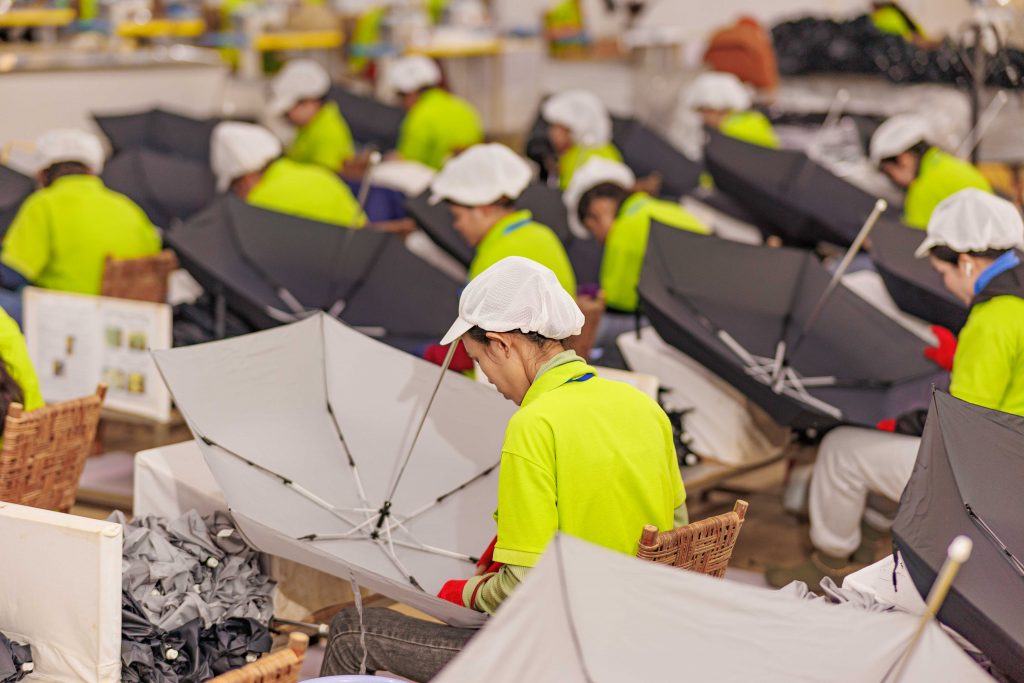
Production facilities matter because custom umbrella projects often require coordination among several processes. The supplier must manage materials, components, assembly, printing, inspection, finished goods, and shipment preparation.
A well-organized operation should be able to explain how it manages production schedules, tracks order requirements, handles material availability, and prepares finished products for dispatch. Buyers do not necessarily need the largest factory. They need a manufacturing operation that is appropriate for their product, order size, quality expectations, and delivery schedule.
YO FU UMBRELLA., LTD states on its official website that it has manufacturing facilities in China and Cambodia. Its factory information describes production involving umbrellas, umbrella ribs, umbrella components, and raincoats. The company also highlights raw-material selection, quality management, production-process optimization, staff training, and warehouse management.
These are useful points for buyers to investigate when considering YO FU for a potential manufacturing project. As with any supplier, the specific facility, production line, and capabilities available for an individual order should be confirmed directly.
Learn more about the company’s operations on its official factory page.
1.4 Confirm That the Supplier Can Support Your Order Volume
A custom umbrella supplier should be able to discuss your expected order quantity and explain the production requirements associated with it.
A small promotional order and a large retail program may require different planning. Larger orders may involve multiple material batches, more extensive packaging coordination, staged inspections, and detailed shipping arrangements. Smaller orders may require additional discussion about available standard models, customization methods, and minimum order quantities.
Before choosing a supplier, clarify:
- Your initial order quantity.
- Your estimated annual demand.
- Whether repeat orders are likely.
- Whether the same design will be used across multiple campaigns.
- Whether different colors or models will be included in one purchase.
- Whether the supplier can discuss production planning for future orders.
Do not assume that a supplier can accept any quantity or deliver within any requested timeframe. Ask for written confirmation of the minimum order quantity, production lead time, sampling schedule, and capacity available for your particular project.
A supplier that understands your business forecast may also be better positioned to discuss practical options for maintaining consistent product specifications over time.
1.5 Evaluate Experience With International B2B Customers
For American importers and brands, international sourcing requires more than manufacturing. Buyers must also coordinate product documentation, packaging specifications, shipping arrangements, commercial terms, and communication across time zones.
A supplier with experience serving international markets may already understand the importance of written specifications, sample approval, clear labeling, and consistent order documentation.
YO FU UMBRELLA’s official company information identifies Japan, Europe, America, and other regions among the markets it serves. This international market experience is relevant to businesses looking for a supplier familiar with cross-border commercial relationships.
However, buyers should confirm the requirements of their own destination market rather than assuming that previous exports automatically establish compliance for every product or order.
1.6 Compare Suppliers Using Evidence, Not Marketing Claims
When comparing manufacturers, create a simple evaluation sheet instead of relying entirely on sales presentations.
| Evaluation factor | What buyers should verify |
|---|---|
| Manufacturing history | Years of experience and relevant product examples |
| Product range | Ability to manufacture the required umbrella type |
| Production operations | Facility location and responsibilities |
| Order capacity | Confirmed capacity for the proposed quantity |
| International experience | Experience with the intended destination market |
| Documentation | Written specifications, quotations, and order terms |
| Repeat-order planning | Process for maintaining consistent specifications |
The objective is not to find the supplier with the longest list of claims. It is to identify the manufacturer that can demonstrate the capabilities your project actually needs.
Tip 2: Verify Product Quality and Quality-Control Processes
The second essential tip is to evaluate the quality of the umbrella itself and understand how the supplier manages quality throughout production.
A custom umbrella must look appropriate for your brand, but appearance is only one part of product quality. Buyers should also consider the canopy fabric, stitching, frame construction, joints, shaft, handle, opening mechanism, finishing, packaging, and the consistency of the finished products.
Quality should be defined before mass production begins. Otherwise, the buyer and supplier may have different interpretations of what constitutes an acceptable umbrella.
2.1 Request and Evaluate a Physical Sample
A physical sample is one of the most useful tools in custom umbrella sourcing. It allows buyers to assess the product directly rather than relying only on photographs or written descriptions.
When reviewing a sample, examine the following areas:
Canopy appearance: Check the fabric surface, color consistency, seams, panel alignment, and overall shape.
Frame construction: Inspect the ribs, joints, shaft, and other structural components for visible defects or loose connections.
Opening and closing: Operate the umbrella several times to check whether the mechanism functions smoothly and consistently.
Handle and grip: Assess whether the handle feels comfortable, fits the intended design, and is properly attached.
Stitching and finishing: Look for loose threads, uneven seams, visible damage, and other workmanship concerns.
Branding: Check the logo size, position, color, readability, and relationship to the canopy seams.
Packaging: Confirm that the umbrella fits the specified sleeve, carton, label, or retail packaging.
A sample is not a guarantee that every production unit will be identical. It is a reference point for the specifications and quality expectations that should be maintained during mass production.
For this reason, record sample approval in writing and make sure both parties understand which details are fixed.
2.2 Choose Materials Based on the Intended Application
There is no single material that is best for every umbrella. The appropriate choice depends on the intended use, target price, product size, weight, durability requirements, design, and market positioning.
For example, a compact umbrella designed for commuters may prioritize portability and ease of storage. A golf umbrella may require a larger canopy and a frame designed for its intended use. A promotional umbrella may need a balance between branding visibility, practical performance, and unit cost.
Material decisions may include:
- Canopy fabric and fabric weight.
- Rib material and frame configuration.
- Shaft material and construction.
- Handle material and shape.
- Components used in the opening and closing mechanism.
- Printing or coating requirements.
- Packaging materials.
Each choice involves trade-offs. A heavier construction may improve certain aspects of stability but make the umbrella less convenient to carry. A more elaborate handle may enhance the appearance but increase cost or affect packaging dimensions.
Ask your supplier to explain the options available for your target application. Whenever possible, define material specifications clearly rather than relying on broad descriptions such as “premium fabric” or “strong frame.”
2.3 Evaluate the Frame, Ribs, Shaft, and Joints
The frame is central to an umbrella’s structure. The ribs support the canopy, while the shaft and joints help the umbrella open, close, and maintain its shape.
A high-quality product should have construction appropriate for its intended use. Buyers should consider whether the frame design, rib configuration, shaft, and connection points are suitable for the umbrella’s size and target application.
During sample evaluation, check for:
- Loose or visibly misaligned joints.
- Uneven rib positioning.
- Components that appear damaged or poorly finished.
- A shaft that does not align correctly.
- Difficulty opening or closing the umbrella.
- Unusual movement or noise during normal operation.
Visual inspection alone cannot establish all aspects of structural performance. If the product must meet specific strength, durability, or wind-performance requirements, agree on an appropriate test method and acceptance criteria with the manufacturer.
Avoid relying on vague statements such as “windproof” without defining what performance is expected and how it will be assessed.
2.4 Check Canopy Fabric and Water-Repellency Expectations
The canopy protects the user from rain and contributes significantly to the product’s appearance. Buyers should consider fabric selection, construction, seam quality, color, and the intended water-repellency performance.
For a rain umbrella, water-repellent performance may be a major purchasing requirement. However, water behavior can depend on fabric treatment, construction, seams, usage, and maintenance. A buyer should not assume that all umbrella fabrics provide identical performance.
If water-repellency is important to your product positioning, discuss the specification with the supplier and establish how it will be evaluated. Request relevant test information where appropriate, and confirm that any performance claims used in marketing materials are supported by suitable evidence.
Other fabric considerations include:
- Color consistency across the canopy.
- Print quality and color reproduction.
- Resistance to visible fading under the intended conditions.
- Fabric texture and perceived quality.
- Compatibility with the selected printing method.
- Ease of folding and storage.
These factors matter for retail umbrellas and promotional products alike. A logo may be correctly printed, but inconsistent fabric color or poor finishing can still make the finished product look less professional.
2.5 Confirm the Quality of Opening and Closing Mechanisms
Umbrellas can use manual, automatic-opening, or automatic-opening-and-closing mechanisms. Each option has different functional requirements and may affect cost, convenience, construction, and maintenance.
Before selecting a mechanism, consider the end user’s needs. A travel umbrella may benefit from convenient one-handed operation, while a straightforward promotional model may prioritize simplicity and budget.
During sampling, confirm that the mechanism works as intended. Ask the manufacturer to explain any relevant operating instructions, safety considerations, and limitations.
For automatic models, buyers should pay attention to consistent operation, the feel of the release button, closing behavior, and whether the mechanism is suitable for the proposed umbrella size and construction.
If the project requires repeated-use durability, discuss an appropriate operational test and acceptance threshold. Do not assume that all models share the same test requirements.
2.6 Define Quality-Control Checkpoints Before Production
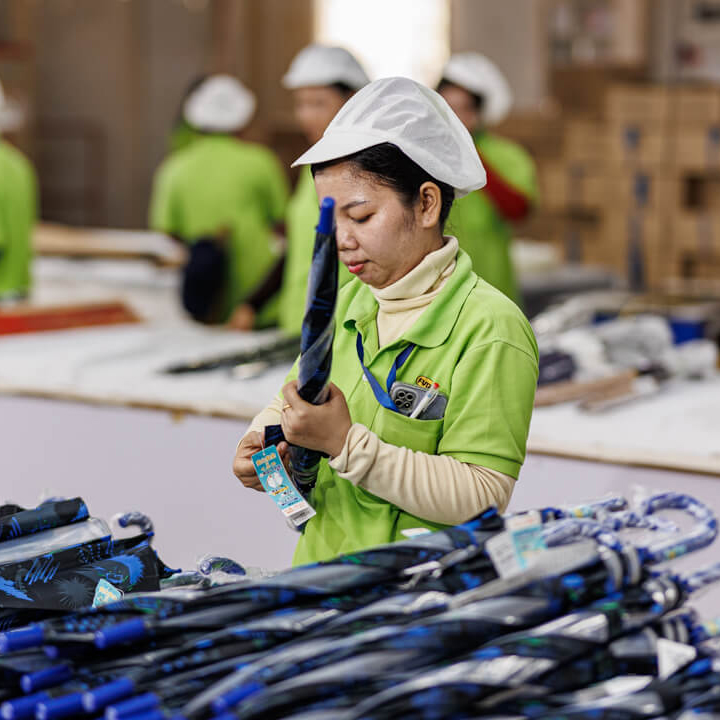
Quality control is more effective when it is planned throughout the production process rather than left entirely to the final inspection.
A practical quality-control plan may include several stages:
Incoming material inspection: Confirm that materials and components match the approved specifications.
In-process inspection: Check relevant production stages for issues such as stitching, assembly, alignment, or printing.
Finished-product inspection: Review completed umbrellas against the approved sample and written requirements.
Packaging inspection: Verify that product labels, quantities, cartons, and packaging specifications are correct.
The appropriate inspection scope depends on the project, order size, product complexity, and buyer’s quality requirements. A supplier should be able to discuss how the proposed plan will work and which records or reports can be provided.
YO FU UMBRELLA’s official factory information emphasizes quality management and process optimization from raw-material selection through final product dispatch. Buyers considering the company can discuss how these processes apply to their chosen umbrella model and what inspection arrangements are available for a specific order.
Read more on the YO FU UMBRELLA factory page.
2.7 Establish a Written Quality Standard
One of the most common sourcing problems is the lack of a clear, shared definition of acceptable quality.
A written specification helps reduce ambiguity. Depending on the product, it may include:
- Product dimensions and tolerances.
- Canopy fabric and color references.
- Frame and component requirements.
- Handle style and material.
- Opening and closing mechanism.
- Logo artwork and placement.
- Printing method and acceptable appearance.
- Packaging and labeling requirements.
- Required tests and acceptance criteria.
- Procedures for reporting defects.
For branding colors, a defined color reference may be more useful than descriptions such as “dark blue” or “bright red.” For logo placement, an approved artwork file or layout drawing can help avoid misunderstandings.
Both parties should also clarify how any changes to materials, components, artwork, or packaging will be reviewed and approved.
2.8 Understand the Relationship Between Quality and Total Cost
The lowest unit price is not always the lowest-cost option over the life of a project.
A product that requires frequent replacement or generates customer complaints may create additional costs through returns, customer service, freight, rework, and lost sales opportunities. On the other hand, paying for features that customers do not need may unnecessarily increase the product cost.
The goal is to find the right balance between product requirements and budget.
Consider these questions:
- Which quality features are essential for the intended use?
- Which features directly influence customer satisfaction?
- Which specifications are required by the brand or retailer?
- Which upgrades are optional rather than necessary?
- What inspection costs or testing expenses should be included?
- How will defects or nonconforming products be handled under the agreed terms?
A reliable supplier should be willing to discuss these trade-offs instead of treating every project as a race to the lowest quotation.
Tip 3: Confirm Customization Options and Communication Standards
The third tip is to make sure the supplier can support your branding and product requirements while communicating clearly throughout the project.
Customization is one of the main reasons businesses choose a dedicated custom umbrella manufacturer. It allows a brand to move beyond generic products and develop umbrellas that align with its visual identity, customer expectations, campaign goals, or retail positioning.
However, customization involves more than printing a logo. It may affect product design, fabric selection, frame construction, colors, packaging, production processes, and approval schedules.
3.1 Confirm the Available Customization Options
Before choosing a supplier, identify which parts of the umbrella can be customized and which options are practical for your order.
Potential customization areas include:
Canopy color: Choose colors that align with brand guidelines or the intended retail collection.
Logo placement: Determine where the logo should appear and how visible it should be when the umbrella is open.
Canopy printing: Discuss suitable printing methods based on the artwork, fabric, colors, and order requirements.
Handle design: Consider the handle’s shape, material, color, and suitability for the product’s intended use.
Frame configuration: Evaluate available structures and components that suit the design and performance requirements.
Opening mechanism: Select a manual or automatic mechanism where available and appropriate.
Packaging: Coordinate sleeves, labels, cartons, inserts, or other packaging elements required for retail or promotional use.
Private-label details: Confirm whether brand labels, product identifiers, or other approved brand elements can be included.
Not every option is available for every umbrella model. Custom components may require additional development, tooling, approval time, or minimum order quantities. Ask the supplier to distinguish standard options from special development requirements.
3.2 Understand OEM and ODM Umbrella Manufacturing
OEM and ODM are two common approaches to custom umbrella production.
OEM, or Original Equipment Manufacturing, generally involves producing a product according to the buyer’s defined specifications, design, or requirements. A buyer may provide the artwork, dimensions, preferred materials, and packaging details, while the manufacturer produces the agreed product.
ODM, or Original Design Manufacturing, generally allows the manufacturer to contribute more to the product design and development process. The buyer may begin with a concept or a set of requirements, and the supplier helps identify an appropriate product design and available customization options.
For example, an established retail brand may have a detailed specification for a compact folding umbrella and need a supplier to manufacture it consistently. This is a natural OEM-style project.
A business launching a new promotional umbrella may know its target audience, budget, and desired appearance but need help choosing a suitable model. An ODM-oriented discussion may be more useful in that situation.
YO FU UMBRELLA has published information about its OEM and ODM services and custom umbrella manufacturing. Businesses can use this as a starting point for discussing whether their project is best suited to an existing model, a customized configuration, or a more involved development process.
Explore the company’s custom umbrella manufacturing information.
3.3 Prepare Your Artwork and Branding Requirements Carefully
Custom branding is a visible part of the final product, so it deserves careful attention before production begins.
To make the process more efficient, prepare the following information whenever possible:
- A high-resolution logo file or vector artwork.
- Brand color references.
- Preferred logo dimensions.
- Desired logo placement.
- The number of printed colors.
- Any restrictions on stretching, cropping, or altering the logo.
- Packaging artwork and labeling instructions.
- Examples of previous branded products, if relevant.
Ask the supplier to provide an artwork proof or sample for review before mass production. Check spelling, proportions, alignment, color, and placement.
If your brand has strict visual guidelines, provide the official documentation rather than relying on informal descriptions. This is particularly important when the umbrella will be distributed to customers, used as a corporate gift, or sold as part of a coordinated retail collection.
Do not approve artwork until the relevant stakeholders have checked it. A small logo error can be difficult or impossible to correct after thousands of units have been manufactured.
3.4 Use Sample Approval to Reduce Customization Risk
A sample approval process creates a shared reference for the buyer and manufacturer.
Depending on the project, the process may involve:
- Confirming the product concept and specifications.
- Reviewing the available umbrella model and customization options.
- Submitting artwork and brand requirements.
- Reviewing a digital proof or preliminary design.
- Evaluating a physical sample when required.
- Recording any necessary adjustments.
- Approving the final sample and written specifications.
- Confirming the production order.
The exact sequence will depend on the product and the manufacturer’s workflow. More complex projects may require additional rounds of sampling or testing.
Before placing the bulk order, ask which sample costs apply, how many revisions are included, whether custom components require additional development, and how sample approval affects the production schedule.
A clear approval process helps prevent disagreements about what was ordered and what should be delivered.
3.5 Evaluate Communication Before You Place the Order
Communication quality is an important indicator of how a supplier may manage the rest of the project.
During the quotation stage, pay attention to whether the supplier asks relevant questions, identifies missing specifications, explains product limitations, and responds clearly to requests for clarification.
Useful signs of professional communication include:
- Quotations that identify the product and relevant specifications.
- Clear explanations of customization options.
- Written confirmation of sample approval.
- Realistic discussion of production schedules.
- Timely notice of material or production issues.
- Clear instructions for artwork and packaging.
- A defined process for handling changes and quality concerns.
A supplier that simply agrees to every request without asking questions may not have fully understood the project.
For example, if your design requires a large logo across multiple canopy panels, the supplier should clarify artwork layout and printing requirements. If you request a particular delivery date, the supplier should discuss the schedule and identify any dependencies rather than promising a date without reviewing the details.
3.6 Confirm Production Lead Time and Delivery Arrangements
Production lead time can depend on the umbrella model, order quantity, customization complexity, material availability, sample approval, factory scheduling, and shipping arrangements.
For this reason, buyers should request a project-specific schedule rather than relying on a general estimate found online.
Clarify the following:
- Sample preparation time.
- Artwork approval deadline.
- Material procurement requirements.
- Estimated production duration.
- Inspection and packing time.
- Shipment method and estimated transit time.
- Delivery destination and agreed trade terms.
- Responsibility for shipping documents and customs arrangements.
For seasonal campaigns, trade shows, corporate events, and retail launches, work backward from the required arrival date. Include time for sample revisions, production delays, and transportation where appropriate.
A clear schedule is particularly important when multiple stakeholders must approve the product before production begins.
3.7 Clarify Pricing, Minimum Order Quantities, and Payment Terms
A professional quotation should make it easier to understand what you are buying and which costs are included.
Depending on the project, the quotation may need to clarify:
- Unit price by order quantity.
- Product specifications and customization details.
- Printing or logo charges.
- Sample and development fees.
- Custom tooling or component costs, if applicable.
- Packaging costs.
- Minimum order quantity.
- Payment terms.
- Production lead time.
- Shipping terms and excluded costs.
- Quotation validity period.
When comparing quotations, ensure that each supplier is pricing the same product. A quote for a standard umbrella with a basic logo print is not directly comparable to a quote for a custom frame, special fabric, multiple-color printing, and retail packaging.
The most useful comparison is based on equivalent specifications and clearly defined commercial terms.
3.8 Discuss Intellectual Property and Confidentiality
Brands developing original designs should consider how their artwork, product concepts, and technical specifications will be handled.
Before sharing confidential information, clarify the supplier’s process for receiving and using design files. If your project involves proprietary artwork, unique product features, or commercially sensitive information, consider whether a written confidentiality agreement or other contractual protection is appropriate.
Also confirm ownership and permitted use of custom artwork, tooling, and product designs under the applicable agreement. These terms should be established before development begins, particularly when the design represents a major part of your competitive advantage.
A supplier relationship works best when both parties understand their responsibilities and expectations.
Why Consider YO FU UMBRELLA., LTD for Custom Umbrella Manufacturing?
When evaluating custom umbrella suppliers, buyers should connect a manufacturer’s stated capabilities with their own project requirements. YO FU UMBRELLA., LTD provides several points that prospective customers can investigate when considering a manufacturing partnership.
Established Manufacturing Experience
According to its official About Us page, YO FU UMBRELLA was established in 1990 and has more than 30 years of umbrella manufacturing experience.
For buyers, a long operating history can be a useful starting point when evaluating industry knowledge and manufacturing continuity. The next step is to discuss how that experience applies to the specific umbrella model, materials, and production volume required.
Manufacturing Facilities in China and Cambodia
YO FU’s official company information identifies manufacturing facilities in China and Cambodia.
For international buyers, it is useful to understand which facility will handle a proposed order, how production will be managed, and what shipping arrangements are available. Facility location alone does not determine product quality or total cost; the decision should be based on confirmed capabilities, quality requirements, commercial terms, and delivery needs.
Emphasis on Quality Management
YO FU’s factory page describes quality management and process optimization throughout production, from raw-material selection to final dispatch. It also highlights staff training and warehouse management.
These practices align with the areas buyers should examine when assessing a supplier’s quality-control approach. Before placing an order, ask how the stated processes apply to your product and what inspection or documentation can be agreed upon.
Support for Customized Umbrella Projects
Businesses interested in private-label or custom-branded umbrellas can use YO FU’s published OEM and ODM manufacturing information to begin a discussion about product development and customization.
A useful initial inquiry should describe the umbrella type, target market, estimated quantity, desired branding, packaging requirements, quality expectations, and preferred delivery schedule. This gives the supplier a clearer basis for assessing the project and preparing a relevant response.
The key is to evaluate YO FU against the same practical criteria you use for any potential manufacturer: relevant experience, product quality, customization fit, clear communication, and confirmed commercial terms.
Which Businesses Benefit From a Custom Umbrella Supplier?
Custom umbrellas can serve different commercial purposes. Understanding the intended use helps buyers identify which supplier capabilities matter most.
Promotional Products Distributors
Promotional products companies often need branded umbrellas for marketing campaigns, conferences, customer appreciation programs, and corporate giveaways.
Important considerations include logo visibility, brand-color consistency, packaging, order quantity, and delivery dates. Buyers should also ensure that the selected umbrella is appropriate for the audience and campaign budget.
Retailers and Private-Label Brands
Retailers may need a recognizable product range that matches their brand positioning and target price.
They should evaluate materials, construction, appearance, packaging, and repeat-order consistency. Sample approval and written specifications are especially important when the product will be sold directly to consumers.
Corporate Purchasing Teams
Companies ordering umbrellas for employee gifts, customer rewards, or business events may prioritize brand presentation, ease of distribution, and dependable project coordination.
A clear quotation, approved logo proof, and realistic schedule can help purchasing teams manage approvals and reduce last-minute problems.
Hotels, Resorts, and Hospitality Businesses
Hospitality businesses may require umbrellas for guest use, outdoor areas, events, or branded merchandise.
The appropriate design depends on the intended environment, storage arrangements, expected frequency of use, and brand requirements. Buyers should explain these conditions when discussing product selection with the supplier.
Outdoor and Lifestyle Brands
Outdoor brands may need compact umbrellas, larger canopies, distinctive colors, or specific product features that match their product range.
They should pay close attention to intended use, construction, material selection, and evidence supporting any performance claims made on product packaging or marketing pages.
Common Mistakes to Avoid When Choosing a Custom Umbrella Supplier
Even experienced purchasing teams can overlook important details when comparing suppliers. Avoiding the following mistakes can make the sourcing process more efficient.
Mistake 1: Choosing Based on Price Alone
A lower unit price does not automatically mean better value. Compare equivalent specifications, quality requirements, packaging, payment terms, and shipping arrangements before making a decision.
Mistake 2: Skipping Sample Approval
Photographs may not reveal all issues involving fabric, stitching, mechanisms, printing, or finishing. Review a physical sample when appropriate and record the approved version as the reference for production.
Mistake 3: Using Vague Product Specifications
Descriptions such as “high quality,” “strong frame,” or “premium umbrella” are not sufficient for a complex order. Define the actual materials, dimensions, components, branding, and performance requirements.
Mistake 4: Ignoring the Production Schedule
Custom printing, sample revisions, material procurement, and packaging can affect the delivery date. Agree on a realistic schedule before committing to a campaign or launch.
Mistake 5: Failing to Clarify Quality Responsibilities
Before production, establish inspection criteria, reporting procedures, and the agreed approach to defective or nonconforming products. The details should be documented in the purchase agreement or related order documents.
Mistake 6: Assuming Every Customization Is Available
Some changes may require new components, tooling, additional development, or higher minimum order quantities. Confirm feasibility and cost before finalizing the design.
Mistake 7: Overlooking Repeat-Order Consistency
If your business plans to reorder the same product, ask how approved specifications, artwork, and material requirements will be retained and referenced for future orders.
Frequently Asked Questions About Choosing a High-Quality Custom Umbrella Supplier
1. What should I look for in a high-quality custom umbrella supplier?
Focus on three areas: manufacturing experience and production capability, product quality and quality-control processes, and customization flexibility with clear communication. The supplier should be able to explain its capabilities, review your specifications, provide a suitable sample process, and confirm commercial terms in writing.
2. Why is manufacturing experience important when sourcing custom umbrellas?
Umbrella production involves fabric, frames, ribs, joints, handles, mechanisms, printing, assembly, and packaging. Relevant experience can help a manufacturer identify practical design considerations and coordinate the production process. Buyers should also verify that the supplier’s experience matches the specific product they want to manufacture.
3. What is the difference between an OEM and an ODM umbrella supplier?
An OEM supplier generally manufactures according to a buyer’s specifications or design. An ODM supplier generally contributes more to product design and development. The exact services vary by manufacturer, so buyers should confirm which design, engineering, sampling, and customization services are available.
4. How can I check the quality of a custom umbrella?
Review a sample, inspect the canopy and stitching, examine the frame and joints, operate the opening and closing mechanism, and verify the logo and packaging. For specific performance requirements, agree on suitable test methods and acceptance criteria with the supplier before mass production.
5. Should I request a sample before placing a bulk order?
In most custom umbrella projects, sample review is a valuable step. It allows buyers to evaluate materials, construction, printing, and appearance before approving mass production. Record the approved sample and final specifications so both parties have a shared reference.
6. What information should I provide when requesting a quotation?
Provide the umbrella type, estimated quantity, preferred materials or features, logo artwork, branding requirements, packaging needs, quality expectations, delivery destination, and target schedule. If some details are undecided, explain your priorities and ask the manufacturer which options are practical.
7. Can I customize the umbrella’s logo, color, handle, and packaging?
Customization depends on the manufacturer’s available models, processes, components, order quantity, and development requirements. Ask which options are standard and which require additional development, cost, or minimum order quantities. Confirm all approved details before mass production.
8. How do I compare quotations from different umbrella suppliers?
Compare quotations based on equivalent product specifications. Review the materials, frame, printing, packaging, sample costs, minimum order quantities, payment terms, lead time, shipping arrangements, and quality requirements. A lower price may not represent better value if important specifications are missing.
9. What makes YO FU UMBRELLA., LTD worth considering?
YO FU UMBRELLA’s official website states that the company was established in 1990 and has more than 30 years of umbrella manufacturing experience. Its manufacturing operations include umbrellas, umbrella ribs, umbrella components, and raincoats, with facilities in China and Cambodia. The company also describes quality management and process optimization as part of its factory operations. Prospective buyers should contact YO FU to confirm the specific capabilities, pricing, and production arrangements available for their project.
10. Does YO FU UMBRELLA manufacture raincoats as well as umbrellas?
Yes. YO FU’s official factory information identifies raincoats, along with umbrellas and umbrella-related components, among its manufacturing responsibilities. Buyers interested in specific rainwear products should confirm the available styles, specifications, and customization options directly with the company.
11. How can I reduce the risk of problems during custom umbrella production?
Prepare clear specifications, review the sample, approve the final artwork, agree on quality criteria, and confirm the production schedule in writing. Also establish a process for approving changes and reporting nonconforming products. These steps reduce ambiguity and give both parties a clearer basis for managing the order.
12. How early should I contact a custom umbrella supplier?
Contact the supplier as early as possible, especially for seasonal campaigns, major events, or products requiring custom components. The schedule may include quotation, sample preparation, revisions, material procurement, production, inspection, and shipping. Ask the supplier for a project-specific timeline instead of assuming that all umbrella models have the same lead time.
Choose a Custom Umbrella Supplier That Supports Your Business Goals
Choosing a high-quality custom umbrella supplier requires more than finding an attractive product or the lowest quotation. A successful sourcing decision depends on whether the manufacturer has the relevant experience, can meet your quality expectations, supports your customization requirements, and communicates clearly throughout the project.
The three essential tips are straightforward:
First, evaluate manufacturing experience and production capability. Confirm that the supplier can manufacture your intended umbrella type and handle your proposed order quantity.
Second, verify product quality and quality-control processes. Review samples, define materials and construction, establish acceptance criteria, and agree on the inspection process before production.
Third, confirm customization flexibility and communication standards. Align on logo artwork, product specifications, packaging, sample approval, pricing, delivery schedules, and quality responsibilities.
YO FU UMBRELLA., LTD offers a manufacturing background that prospective buyers can explore as part of this evaluation. Established in 1990, the company identifies umbrellas, umbrella ribs, umbrella components, and raincoats among its production categories. Its official factory information also describes manufacturing operations in China and Cambodia, along with an emphasis on quality management, process optimization, and warehouse management.
For American brands, distributors, wholesalers, and corporate buyers planning a custom umbrella project, the next step is to define the product requirements and discuss them directly with a potential manufacturing partner. A clear inquiry makes it easier to evaluate feasibility, compare quotations, review samples, and establish a shared production plan.
If your business is looking for a custom umbrella manufacturing partner, visit the official YO FU UMBRELLA website to learn more about the company and begin a conversation about your project.
A better custom umbrella begins with a better supplier decision: experience, quality, and customization supported by clear communication.